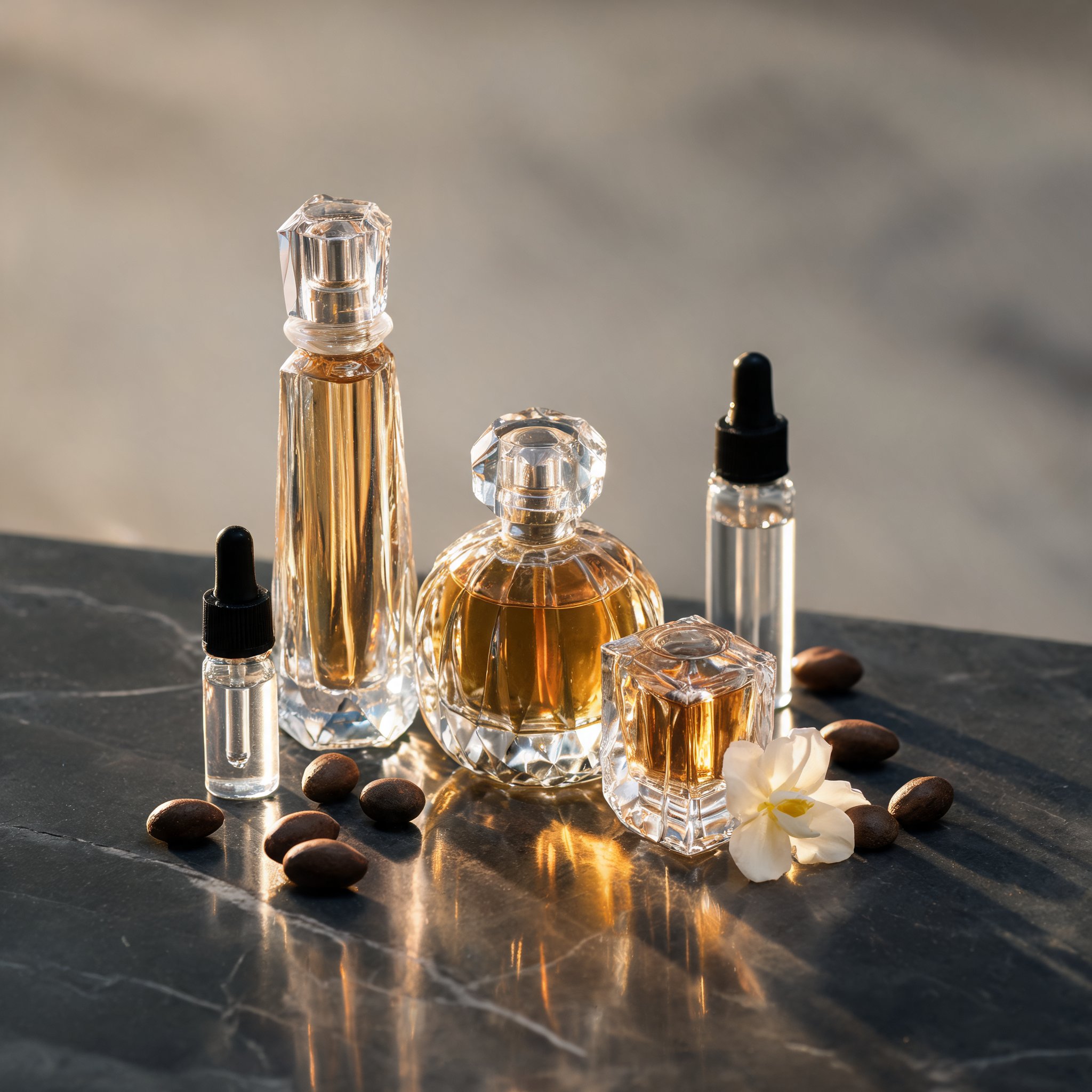
Givaudan's organic sales growth in the third quarter came in at nearly twice the level analysts had forecast, as demand for luxury perfume scents accelerated through the period. Like-for-like sales rose 8.6% in the quarter, against analyst expectations of 4.7%, according to the company's results.
Fine fragrance drives the beat
The flavour and fragrance group's performance was propelled by a surge in sales of scents for luxury perfumes. On a business-unit basis, Fine Fragrance sales increased 15.3% like-for-like, against a competitive prior-year comparable of 18.7%. Separately, analysts at Vontobel and Jefferies estimated, as reported by Reuters, that Fine Fragrance sales grew around 31% organically in the third quarter alone. The sustained back-to-back double-digit growth points to continued resilience in Givaudan's fine-fragrance business and strong demand across the premium perfume market, even as the unit laps a demanding comparison.
Strong demand was not confined to fine perfumery. Consumer Products sales increased 9.3% like-for-like against prior-year comparable growth of 5.9%, suggesting that fragrance demand extends into personal, oral, home and fabric care. By contrast, Fragrance Ingredients and Active Beauty combined sales fell 2.5%, compared with an increase of 1.5% like-for-like in the first nine months of 2025.
Divisional and group figures
In the first nine months, Fragrance & Beauty generated CHF 3.15 billion (US$3.78 billion), up 8.8% like-for-like and surpassing the 8% growth recorded in the same period a year earlier. That unit accounted for approximately 53% of Givaudan's overall sales during the period. In the third quarter alone, Fragrance & Beauty generated CHF 1.14 billion (US$1.37 billion), with 13.5% like-for-like growth — up from 6.8% growth in Q3 2025.
Group-wide, Givaudan recorded sales of CHF 5.89 billion (US$7.08 billion) in the first three quarters. The report shows a significant acceleration as the nine-month period came to a close. Vontobel analyst Arben Hasanaj said the acceleration should reinforce confidence in Givaudan's growth profile and resilience, according to Reuters.
Acquisitions and currency reshape the headline
Givaudan's like-for-like figures exclude acquisitions, so the reported numbers carry a different mix. On a reported basis, acquisitions contributed 2.8% to Fragrance & Beauty growth during the nine-month period, while currency translation had a negative impact of 3.8%; at group level, acquisitions contributed 1.4%. Two transactions the company highlights are Belle Aire Creations for CHF 62 million (US$74.48 million) and Vollmens Fragrances for CHF 20 million (US$24 million). The currency drag of 3.8% at the Fragrance & Beauty level illustrates how exchange-rate swings can mask underlying demand even when organic growth is running well above forecast.
Regions diverge
The geographic picture was uneven across the nine months:
- Asia Pacific was Givaudan's fastest-growing geography, with sales up 10.6% like-for-like in the first nine months of 2026, compared with 4.6% a year earlier. Within Taste & Wellbeing, the region rose 7.1%, against a 0.5% like-for-like decline in the prior-year period.
- South Asia, Africa and the Middle East increased 4.1% like-for-like, compared with comparable growth of 8.8% in the first nine months of 2025.
- Europe rose 1.5%, against 3.8% previously, while Latin America rose 1.1%, against 3.1%.
- High-growth markets increased 7.9%, versus a more modest 2.7% in mature markets.
- North America proved the most challenging region: Taste & Wellbeing fell 3.3% like-for-like, compared with 3.9% in the first nine months of 2025, though the region overall grew 1.1%. Givaudan did not separate the region's financial figures by category.
The company cites continued weakness in its Health and Functional Business Unit and US tariff refunds made to Givaudan customers during the third quarter of 2026 as the primary reasons for the North America decline.
Market reaction and read-through
The report lifted Givaudan's shares by nearly 7% after release, reaching a 15-month high. The update also had a positive ripple effect on other industry players: following the financial report, peers dsm-firmenich, Novonesis and Symrise saw their shares rise between 1.6% and 3.1% in early trading, suggesting investors read the results as a signal for the wider fragrance and ingredients sector.
The results arrive at a moment when the fine-fragrance market is proving unusually resilient: the Fine Fragrance unit's reported 15.3% like-for-like growth came on top of an 18.7% prior-year comparable, meaning the business expanded at double digits for a second consecutive stretch rather than rebounding from a weak base. That pattern, together with the roughly 53% share of group sales contributed by Fragrance & Beauty, helps explain why the division's momentum is central to how investors read Givaudan's overall trajectory.
What the numbers signal
Givaudan's figures for the first three quarters of 2026 indicate a persistent appetite for fragrances among both consumers and brands. They predominantly reveal continued potential for growth opportunities in fine fragrances, fragrance ingredient differentiation and premiumisation. The company underscores the consistency of its growth despite geopolitical and macroeconomic volatility, stating that it demonstrates market resilience.
Taken together, the results point to a premium-led demand cycle in fragrance, with luxury perfumery driving the strongest growth and consumer categories following at a solid, if lower, pace, while ingredients and active beauty remained a drag. The divergence between high-growth and mature markets, and the mix effects from currency and acquisitions, underline how much of Givaudan's headline performance depends on where demand is concentrated rather than simply on overall volume.