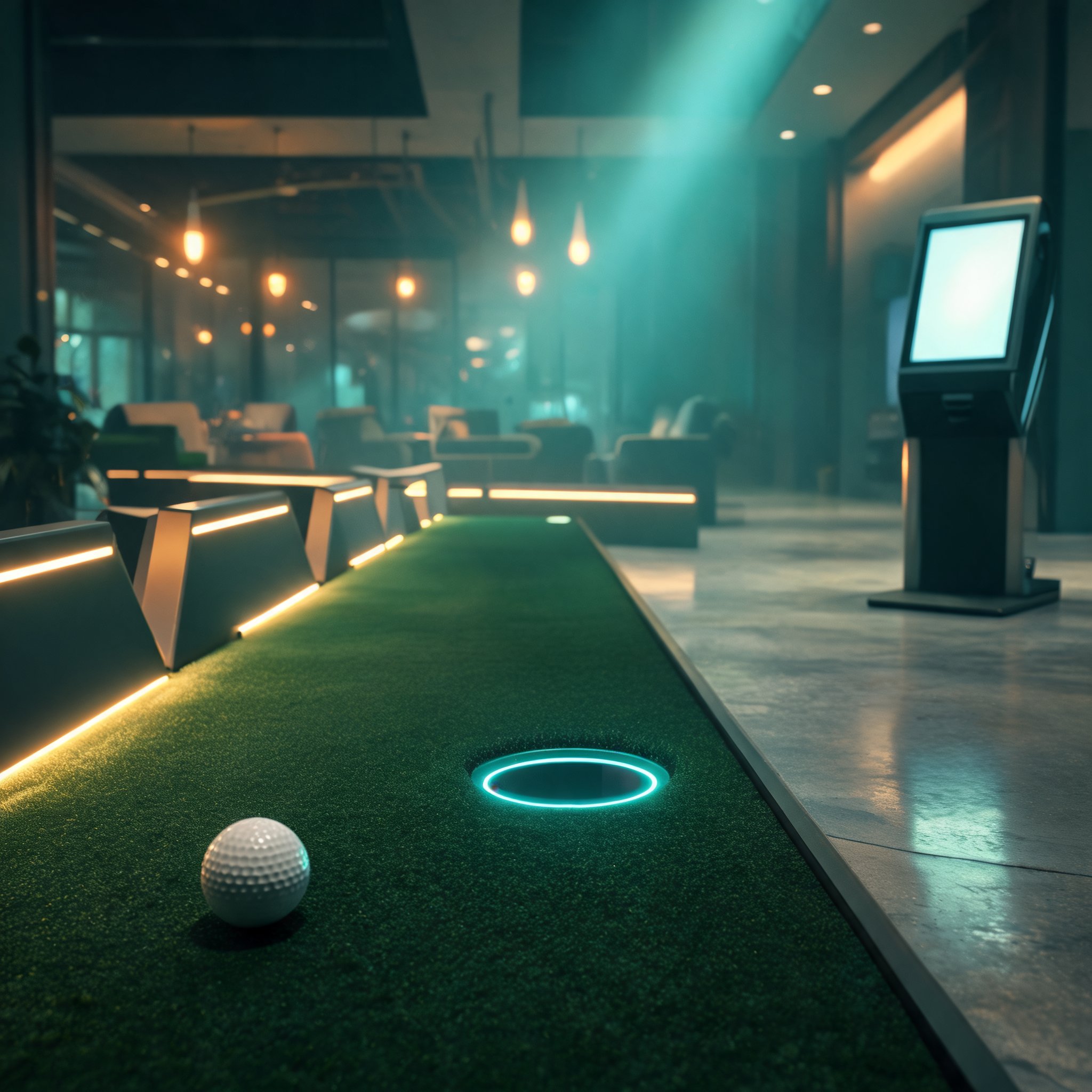
Holovis is presenting its 360Golf brand as a connected game platform rather than a themed mini golf course, built on automated scoring, gamified on-course features and an analytics engine aimed at operators in the competitive socialising market. The company says demand now spans the UK, Europe, the Middle East, North America and Asia Pacific, and it will show the product at the Land Leisure & Tourism Show in Birmingham on 4–5 November at booth LLT360, and at IAAPA Expo in Orlando on 16–20 November at the Holovis booth, #S448, with playable demonstrations available at the 360Golf Orlando office nearby.
Stuart Edgington, global director of business development, attributes the platform's position to familiarity: mini golf is already one of the world's most accessible leisure activities, so the technology is layered onto an existing format rather than replacing it, adding competitive and interactive elements with what he describes as more measurable commercial value. Guests of all ages register, collect an assigned smart ball and begin playing with little explanation or staff time, which the team says suits operators looking for intergenerational appeal across families, young adult social groups and corporate bookings.
Automated scoring and reasons to return
The foundation is automated scoring. Smart balls, tees and cups work with the HoloTrac scoring system, removing paper scorecards and acting as a referee when competition is close. Above that sits a suite of gamified elements: SuperShots that offer alternative ways to score, Triumphs that present awards and unlock new challenges, plus bonuses, on-course games, player accounts, achievements, leaderboards and video celebrations. Matt Dobbs, business development director, says the mix gives players more reason to compete, to celebrate and to compare scores afterwards, and so more reason to come back.
DeepSmarts and the operator case
Player and course data feed DeepSmarts, an AI engine that Holovis uses both to shape product development and as a service for clients. Edgington says it can support higher uptime, insight into how players interact with the course, seasonality analysis and ideas for operational adjustments. Project manager Maaz Ussen adds that the same system lets engineers look back at incidents remotely and identify a fault without an immediate site visit.
The commercial target is throughput and secondary spend, with capacity quoted at up to 80 players per hour per course. Dobbs argues that an intuitive kiosk-led system keeps guests moving and leaves the operations team free to look after them, which he links directly to food and beverage revenue. Operators can also use the data for promotions in quieter periods or to reach under-served audiences.
Retrofit, catalogue or custom
Installation comes in three formats. Tech-only packages can be retrofitted into existing mini golf attractions in roughly six to eight weeks; catalogue holes can be installed and ready to play in eight to 12 weeks; fully bespoke courses take six months or more. The Top 9 course at Netflix House is cited as a fully custom, IP-led build with unique hole designs and multiple custom interactive elements, including themes drawn from One Piece, Squid Game and Floor is Lava.
Physical conditions shape other projects. Tee Time, delivered in four installations for Norwegian Cruise Line, uses marine-grade hardware described as IP-rated, with rugged cups and tees and specialist screens. At Lucky Duck in Norway, a custom course offers two routes on each hole, and multi-site operators such as Saudi Entertainment Ventures can keep a consistent core while varying theming, layout or branding across locations.
At Butlin's PLAYXPERIENCE centre in Bognor Regis, part of a £15m project that opened in 2024, three nine-hole courses include neon glow, Las Vegas-themed and wheelchair-accessible music-themed layouts. Dobbs says busy weeks bring about 5,000 players and around £40,000 in revenue per week. The work also fed into inclusive design, from right- and left-handed play and putter sizing to a drop-down top cap that lets a wheelchair reach the course and wider spacing between holes.
Beyond mini golf
Holovis is working with Roxy Leisure to add stroke-counting technology to its crazy pool tables, and Ussen says the ambition is to apply the technology to other sports. Edgington expects competitive socialising eventually to reach peak saturation and is examining adjacent markets. For operators, Dobbs frames the starting point as a conversation about the venue's constraints, the target audience and the commercial model, describing 360Golf as a turnkey offer rather than a course purchase.