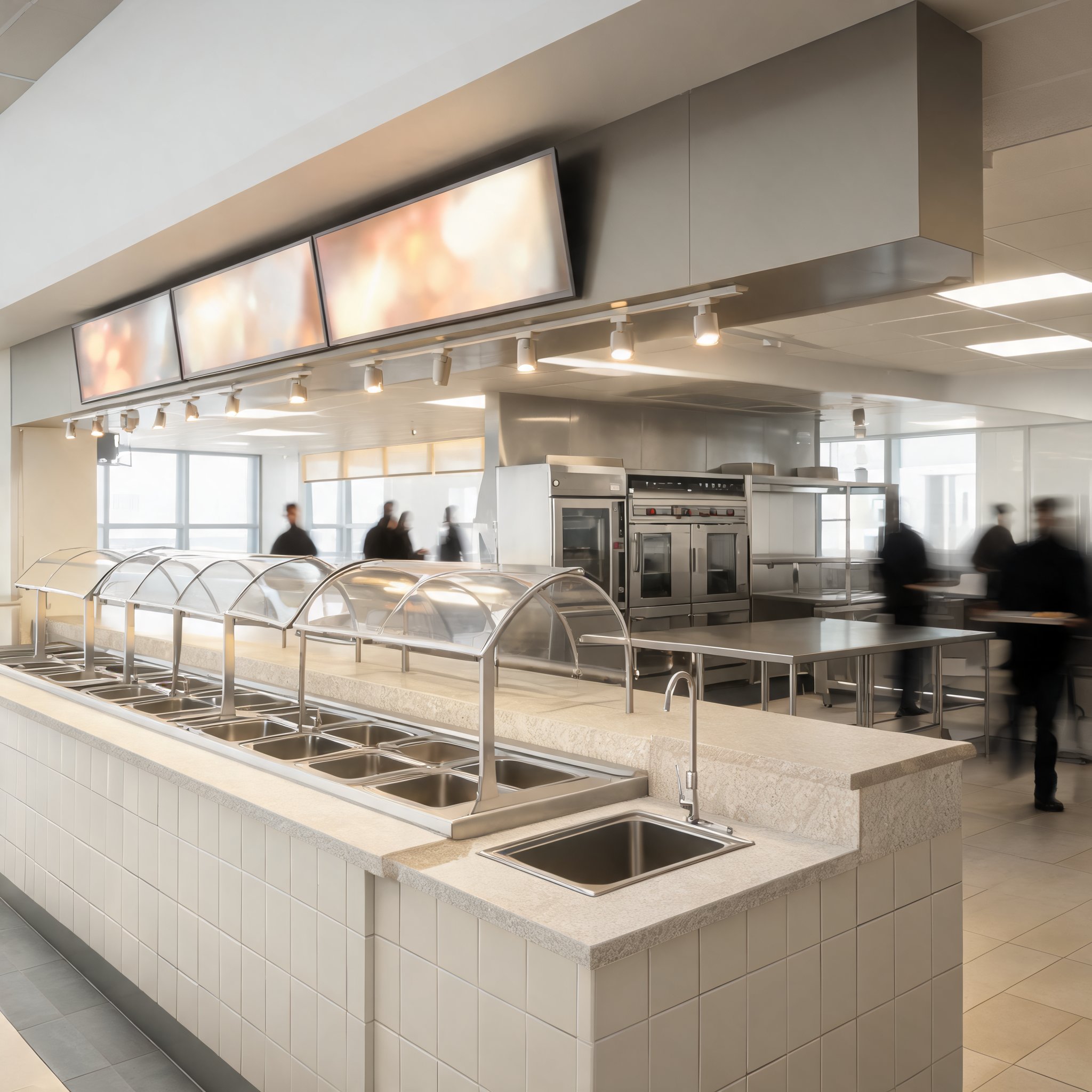
School kitchen design is moving toward greater flexibility, more multifunctional equipment and a less institutional look, according to Eric Goodrich, a principal partner at Minneapolis-based foodservice design and consulting firm Rippe Associates. He said high school principals and administrators are seeking the look and feel of collegiate dining, while middle school foodservice today resembles the high schools of yesterday, with more variety and more made-to-order items. Technology, sustainability and efficiency are also shaping K-12 projects as labor and square footage remain at a premium.
Flexible serving lines
Goodrich said operators want flexibility on serving lines, including hot and cold convertible wells and food shields that can switch between full-service and self-serve. A station might have staff serve the entree while toppings or accompaniments are self-serve, with tilting shields adjusted to either position to improve speed of service. If a meal period is short-staffed, operators can also convert a full-service station to self-service quickly.
Digital menu boards add another form of flexibility. Goodrich said operators want to show menu changes at every serving station. Informing students before they enter the line can shorten the experience and increase throughput, he said. Greater awareness of what neurodivergent students need is also affecting design, and clear labeling helps those students make decisions quickly.
Multitasking equipment
With limited space and staff, school kitchens are turning to equipment that can perform several jobs. Goodrich described a push for multifunctional equipment that delivers more capacity per square foot. Combi ovens have been popular in K-12 for some time, and he said more districts are moving toward blast chilling. RATIONAL’s iCombi Pro, for example, is designed to support a cook-chill program, while the RATIONAL iVario cooking system comes in several models that can replace frying pans, deep fryers and stoves; larger models can also replace kettles and tilting skillets.
Goodrich said combi ovens appeal because one unit can replace two or three pieces of equipment and because they support consistency. Operators can preprogram items and use a single button for a product such as a chicken patty, reducing the need to monitor a timer or temperature. Self-cleaning features save time, and the ability to add humidity or moisture can improve yields, he said.
Sustainability and workflow
Sustainability goals are also influencing kitchen plans. Goodrich said districts are showing less reliance on disposals and more interest in composting food waste. Equipment that reduces packaging waste, such as milk-dispensing systems, is gaining ground. In some designs, milk is stored in the walk-in and routed to the front of the house almost like beer lines, making service easier for staff.
Goodrich also pointed to recirculating trough systems as a way to support two-handed work. Instead of holding a spray rinse in one hand and cleaning each tray, staff can scrape with both hands. Reducing steps and freeing both hands can nearly double speed, he said.
Student experience and open kitchens
Goodrich said the best school kitchens make students feel comfortable and welcome. Demand is growing for higher-end finishes and a homier feel, with less stainless steel everywhere. Stone countertops and tray slides, tile fronts on serving lines and sufficient display lighting are high-impact choices.
Operators are also more open to open kitchen designs than in the past, he said. In older layouts, a wall separated the serving area from the kitchen. Removing that wall can help districts gain square footage and support the student experience they want.
RATIONAL said K-12 operators adding iCombi units can receive a free additional year of warranty coverage. The program, launched in August, covers iCombi Pro and iCombi Classic models and extends the standard two-year warranty by 12 months at no charge to the school or district.