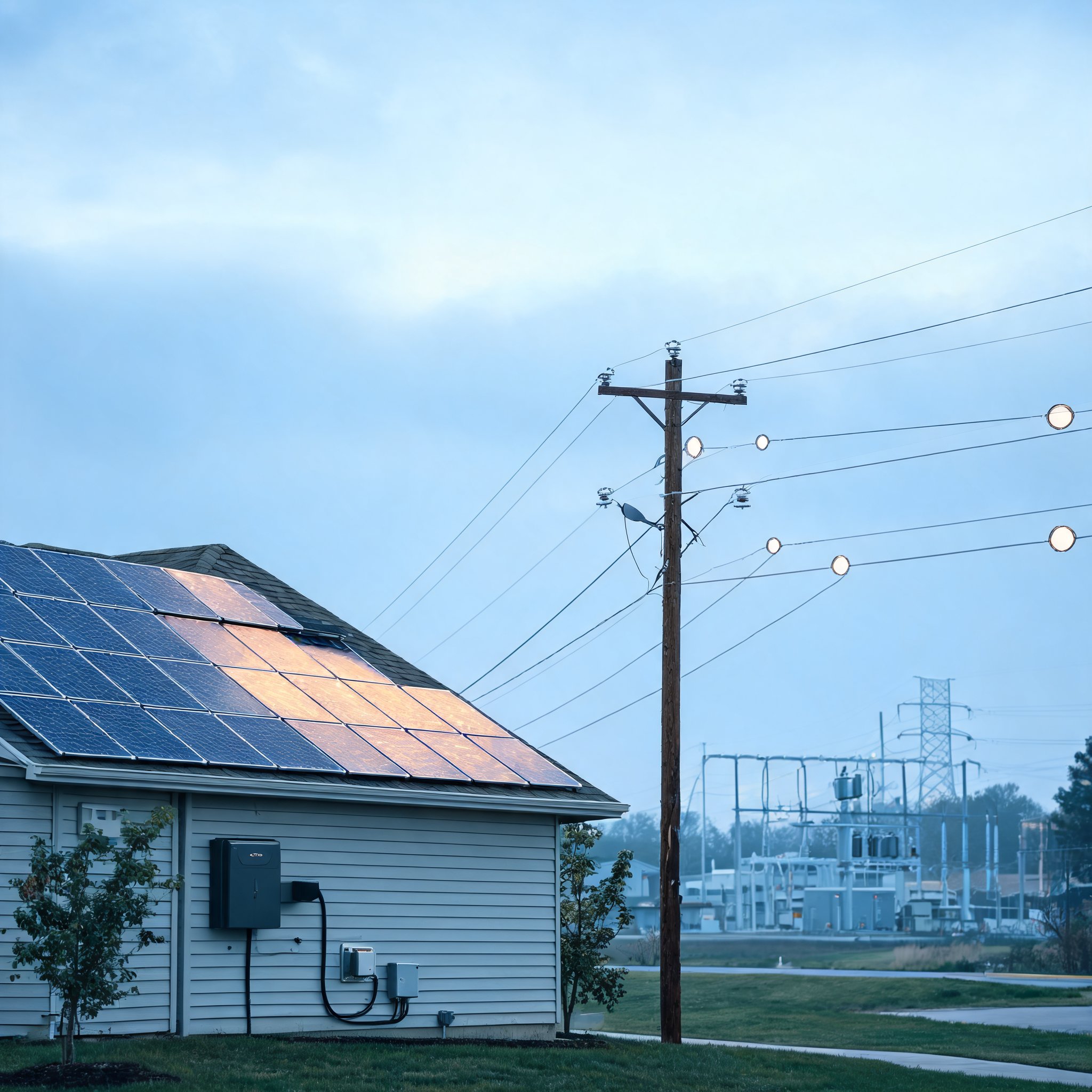
The Storage and Clean Energy Coalition (SCEC), a group of solar and storage industry members, has filed testimony opposing the proposed merger of utilities Dominion Energy and NextEra Energy, arguing that the combination would harm competition in Virginia.
In the filing, the coalition said there is “no doubt” that the proposed transaction poses an unacceptable risk to the competitive landscape in Virginia, and that for this reason SCEC opposes the merger as filed.
Competition and distributed resources
SCEC said it is concerned that the merger could affect the proliferation of renewable energy sources in Virginia, citing questions about energy competition in the state. The group wrote that the utilities are “entirely silent” on competition in the procurement of generation resources, on competition in the form of distributed energy resources, and on competition to provide non-wire alternatives to traditional utility infrastructure investment.
The interconnection question
Lindsey Hallock, interconnection policy director at Permit Power, an SCEC member, disputed the companies’ assurances to regulators that the merger would not affect competition. She said that claim does not hold for a Virginia family trying to bring down its bills by generating and storing its own electricity at home, because Dominion and NextEra policies make connecting home solar and batteries to the grid time-consuming and expensive.
The coalition is asking the commission to mandate interconnection reform as a condition of the merger, including requirements to automate the interconnection process and to authorize the use of meter socket adapters, which the testimony says reduce the cost of home solar and battery installations.
SCEC also contends that the long interconnection queues at both utilities would worsen if the two were to merge. It wants the utilities to implement interconnection automation tools for residential and small commercial projects and to permit meter sockets, which can prevent main service panel upgrades, to quicken the process.
Meter socket adapters, the group says, allow a home solar or battery system to connect without upgrading the main service panel, which the testimony argues shortens timelines and lowers costs for homeowners.
Political influence cited
The testimony points to what the group describes as numerous examples of NextEra exercising political influence to extract concessions or implement policies that favor it over competition. It cites as one of the most infamous NextEra’s role, through its Florida Power & Light utility, in influencing legislation that would have substantially reduced rooftop solar compensation for residential customers at a time when a very small percentage of households had rooftop solar.
The coalition’s case, as set out in the testimony, centers on the conditions attached to the transaction and on competition for customer-sited resources.