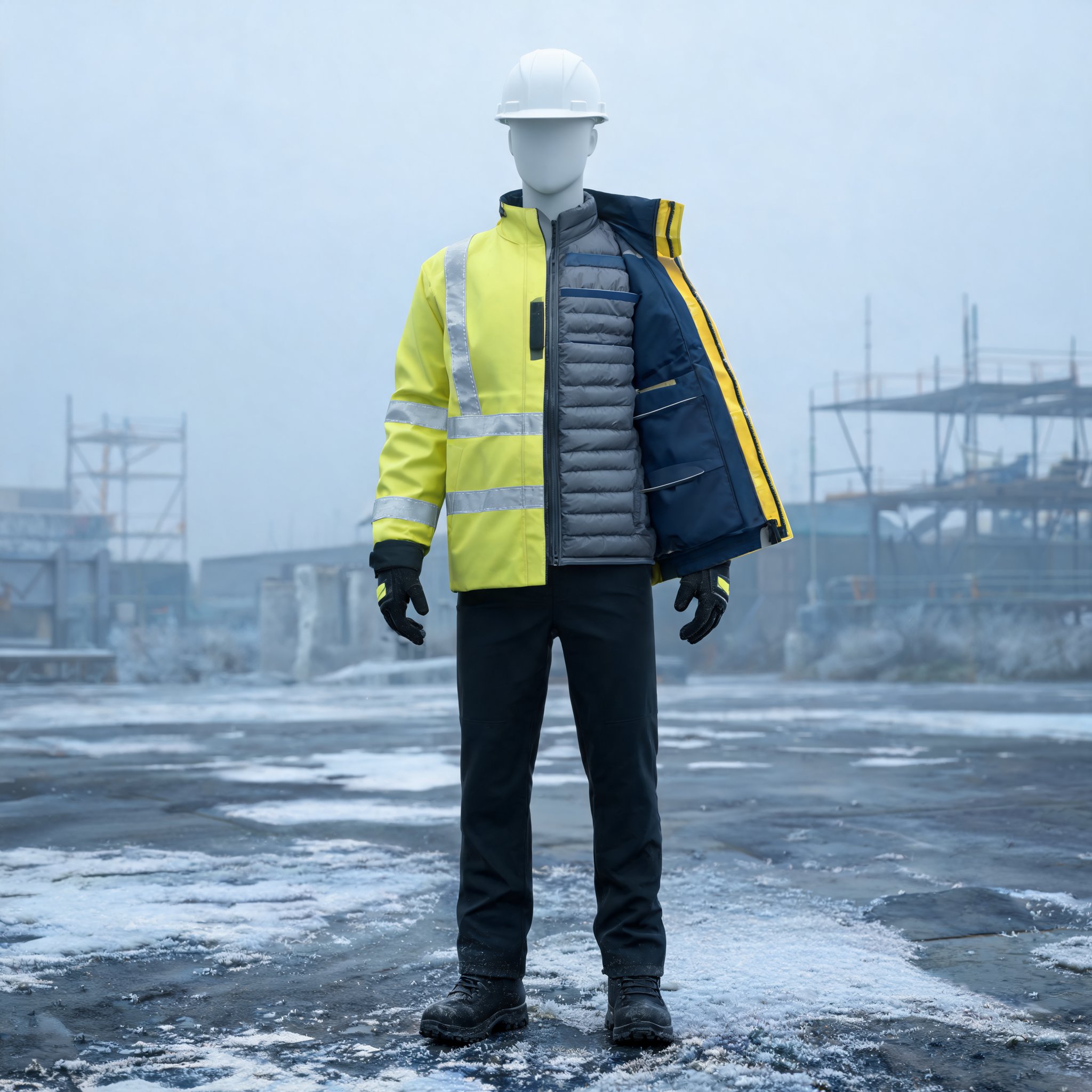
Outdoor work in winter can increase risks for employees when personal protective equipment is selected or combined incorrectly, according to CWS Workwear. The company has highlighted five typical protection gaps in winter PPE, with particular attention to the way clothing layers work together.
Shorter days, wet conditions and frost change the hazard profile at many outdoor workplaces. According to CWS Workwear International GmbH of Dreieich, these changes often occur without a corresponding adjustment to personal protective equipment.
In a current guide, the company says protection gaps arise especially from the interaction between clothing layers. Individual items may be certified, but the combination actually worn may not meet the requirements of the relevant standards.
The warning therefore shifts attention from single garments to the complete outfit. A jacket, midlayer, trousers, gloves or footwear can each be suitable on its own, yet the assembled system still needs to be assessed as a whole. The five examples point to where overall protection may fall short in winter conditions.
The practical implication is that winter PPE selection should account for cold, wet and low-light conditions together, not only for the properties of separate products. The central point of the guide is that certification of individual components does not by itself confirm that the worn combination is adequate for the relevant standard.